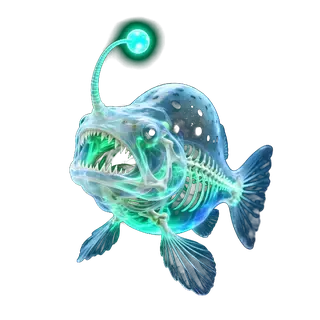
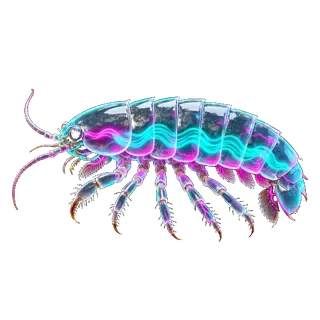
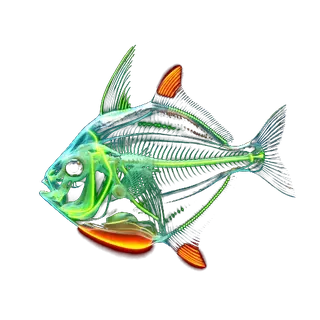
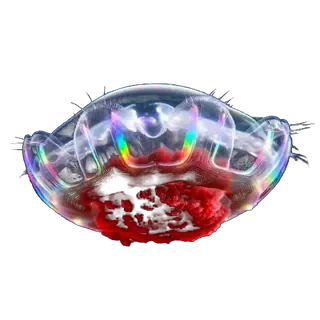
Glowing Oceans: a touring deep-sea art exhibition
A touring exhibition of deep-sea art and natural history at four scales: one wall, a room of 100 to 200 m², a hall of 400 to 900 m², or twenty-four buildings across a city.
The exhibition
From the book grows an exhibition, and it grows with the place that shows it: from a gallery to a museum, from an aquarium or exhibition centre to a whole city. Each creature has several plates, so each showing is chosen afresh for its space. It comes in four scales.
One wall
In a gallery, as it is
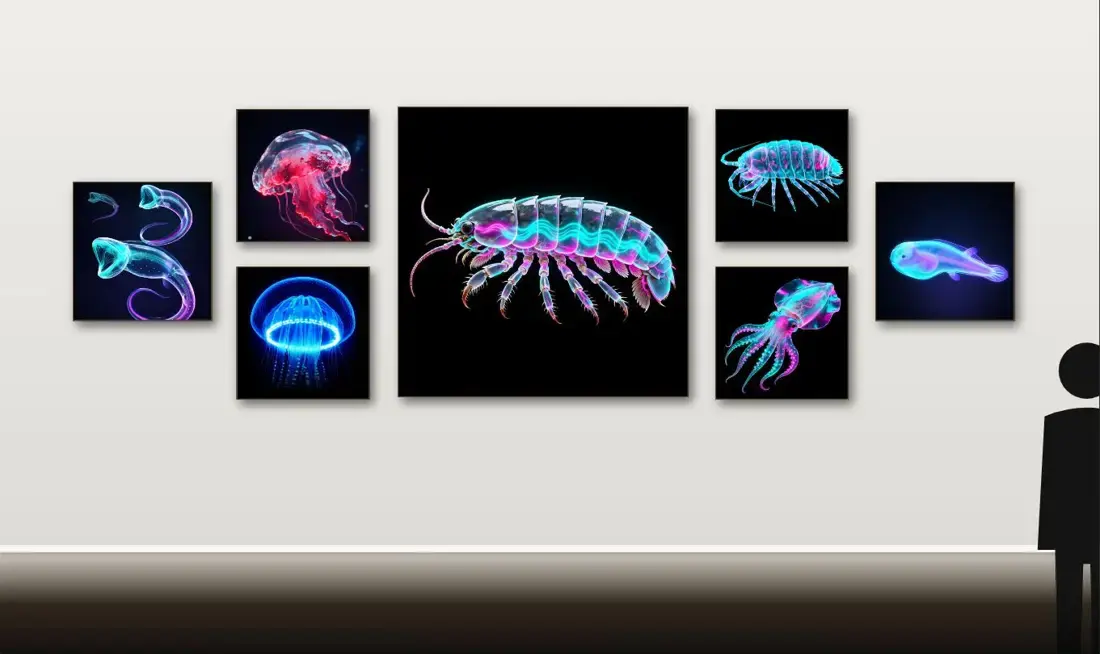
The smallest exhibition is a single wall. It needs nothing built and nothing darkened: a group of works, the gallery's own lights, and a morning to hang them.
Nine works on four metres: one at 100 cm in the centre and eight at 60 cm around it, printed on wood or acrylic under a layer of glass. The works are sold from the wall and replaced from the series.
A room
An exhibition of 100 or 200 square metres
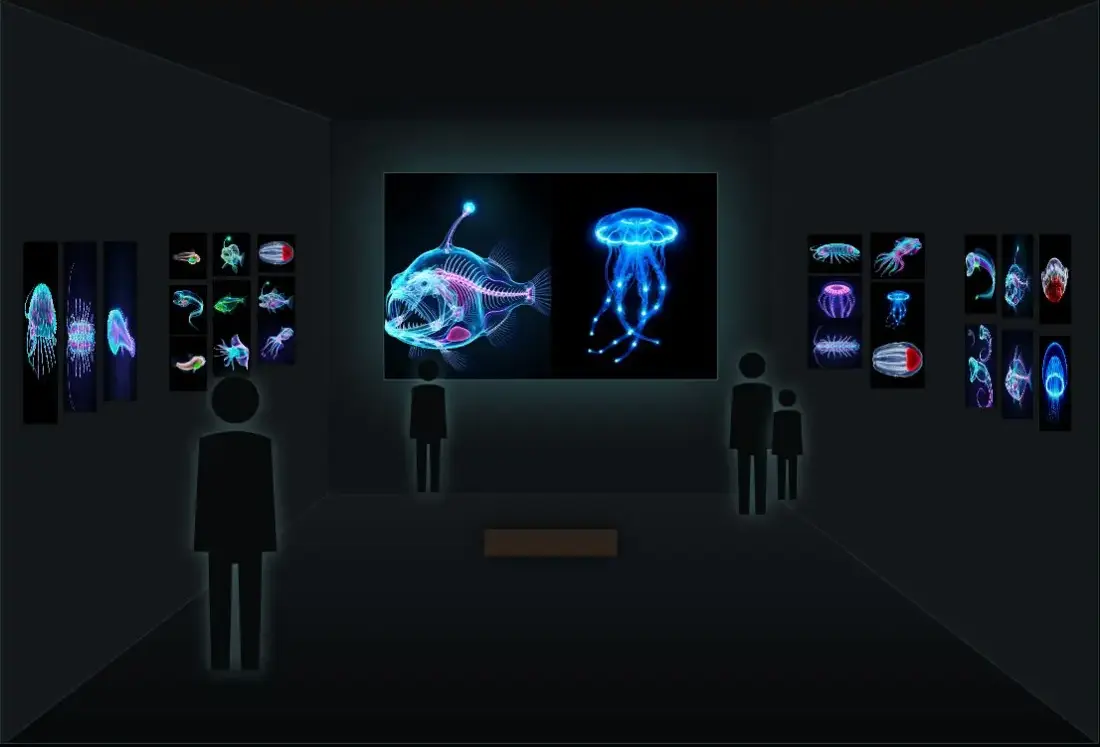
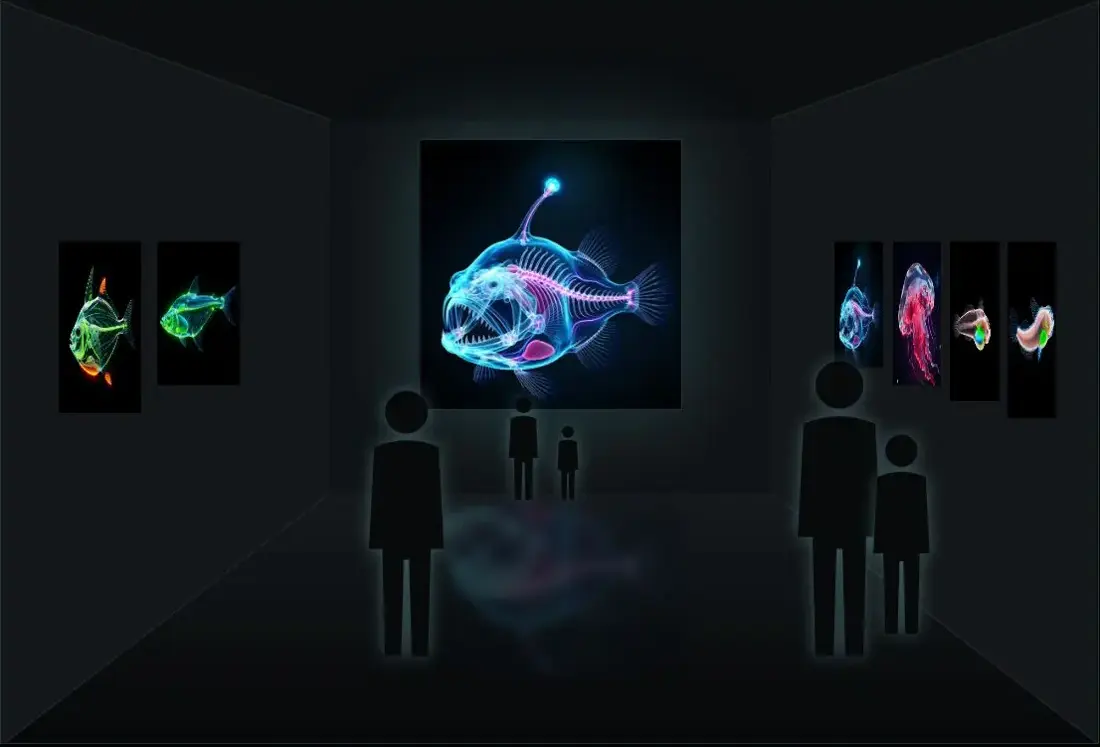
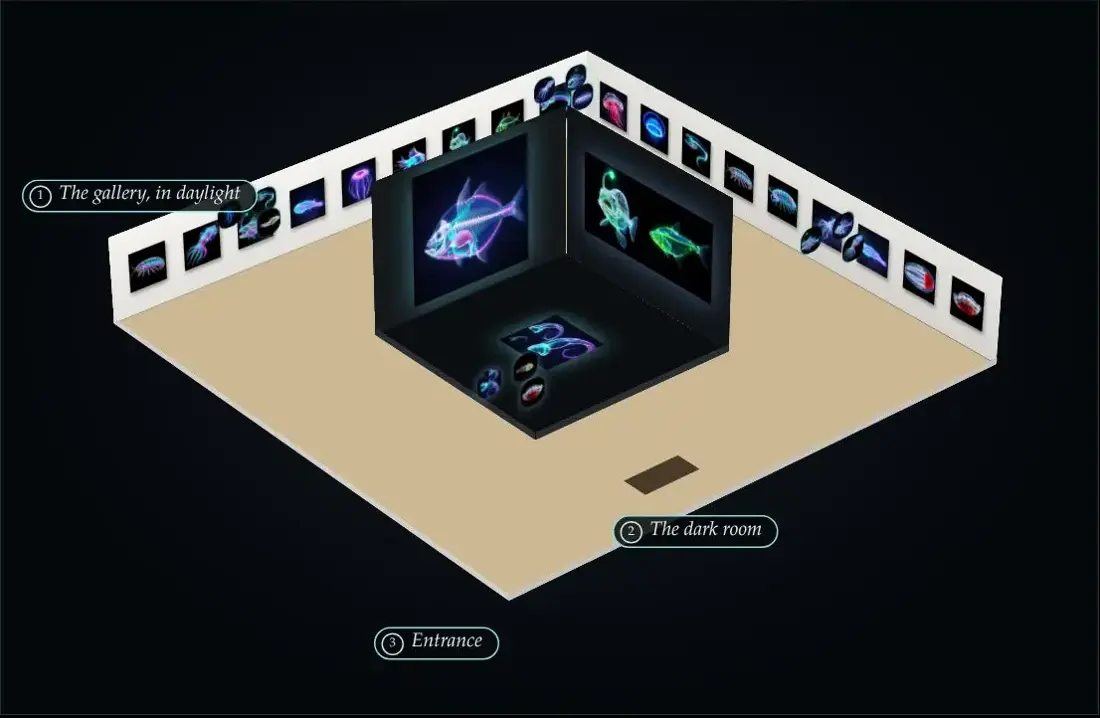
With a room of its own, the series becomes an exhibition: a route, a change of light, and creatures at many times their size. It fits a gallery or a museum, and just as well the halls of an aquarium, beside the living animals.
A hall
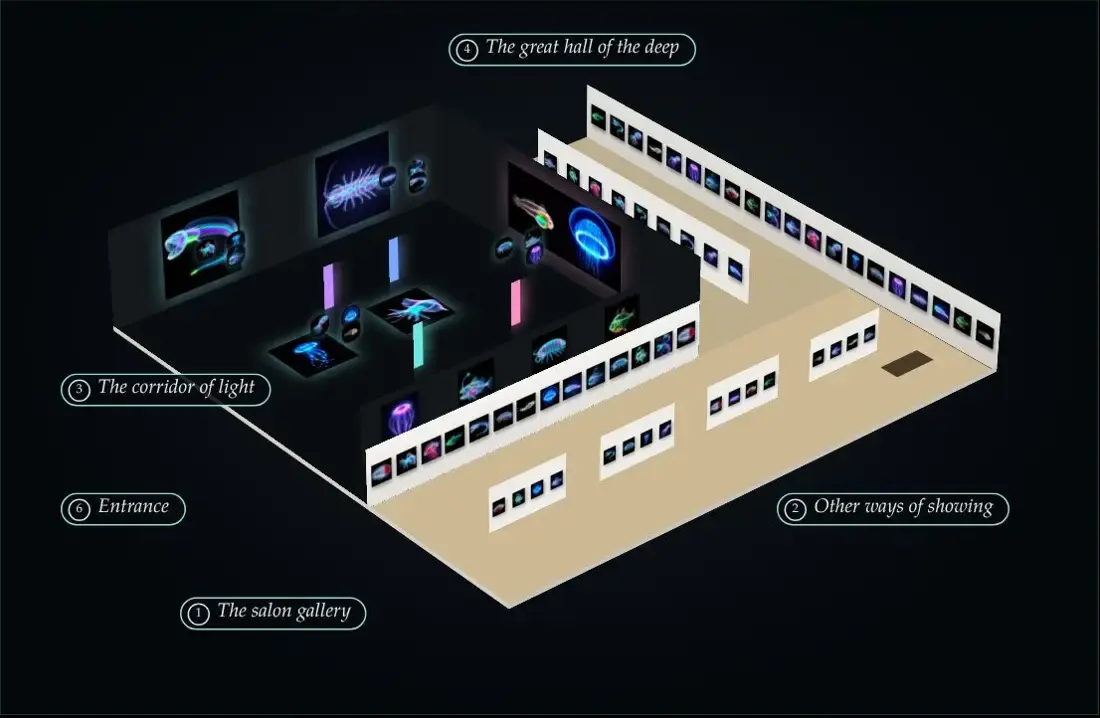
Exhibitions of 400 and 900 square metres
In a hall, the visit becomes a dive. Visitors go down through the zones of the sea, each darker than the last, and every way of showing the works can be used at once: salon walls in the light, triptychs and dark walls, a corridor of light, lightboxes three metres high, works underfoot, and prints five metres tall.
A city
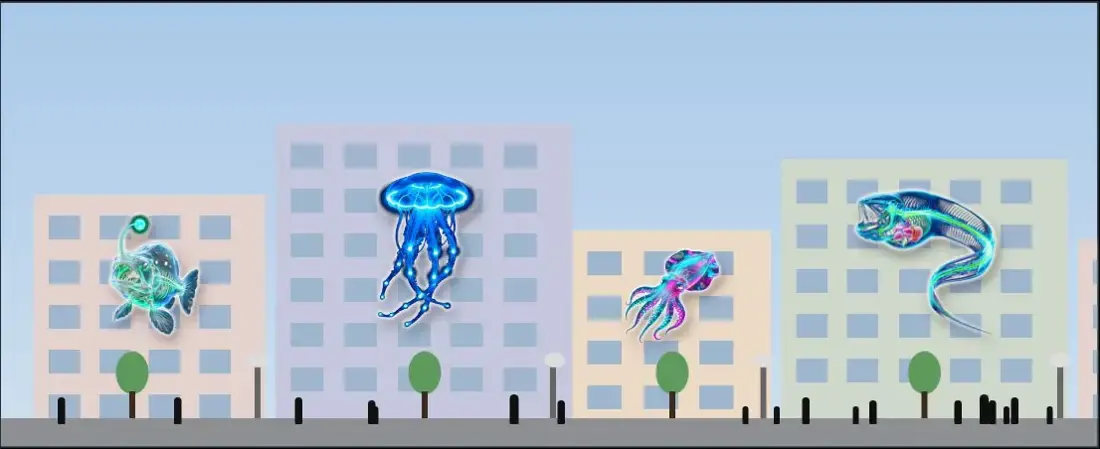
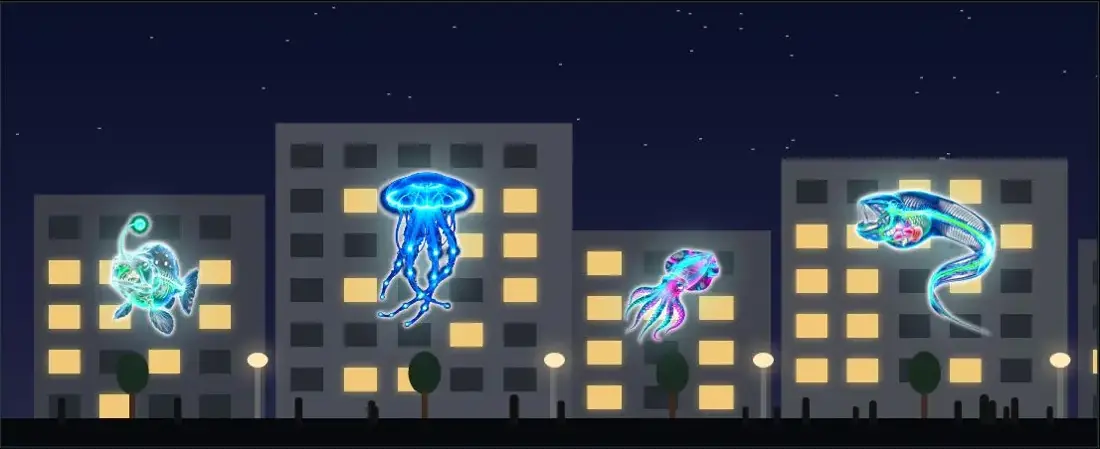
Twenty-four buildings, one walk, by day and by night
The largest exhibition has no walls of its own. Twenty-four creatures of the deep, cut to their outline and five to ten metres across, are fixed to twenty-four buildings across a city, along a seafront or a harbour, and people walk from one to the next. It is made for a municipality and its sponsors: a way to turn a whole town's attention to the sea, and to the animals almost nobody has ever seen.
To the town
- A free event in the open air, for every resident
- A reason to walk the town, and to come from elsewhere
- A subject for schools: a class can follow the trail
- Pictures that travel: every building becomes a photograph
To a sponsor
- Its name beside the largest works in the city
- A visible commitment to the sea and its protection
- A season of presence, on the trail map and at each stop
- Evenings and guided walks for its own guests
Eighteen ways of showing the works
On the wall
- Print on wood or acrylic, under glass
- Salon wall
- Free-standing wall
- Triptych
- Diptych
In light
- Lightbox, 3 × 3 m
- Lightbox, 6 × 3 m
- Corridor of light
- Lit column
- Ceiling panel
- Shop window
In the room
- Dark room
- Floor piece
- Hanging cut-outs
At great size
- Minuscule Monumental, up to 5 × 5 m
- On a building, 5 to 10 m
- Light at night
- Projection mapping
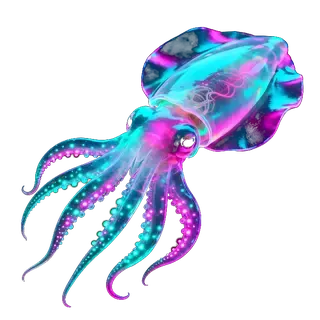
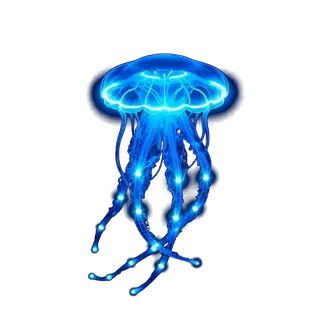
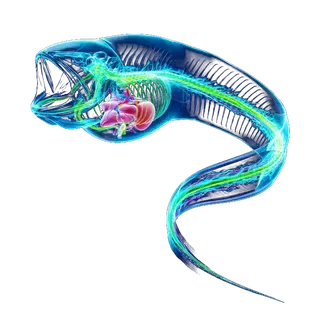
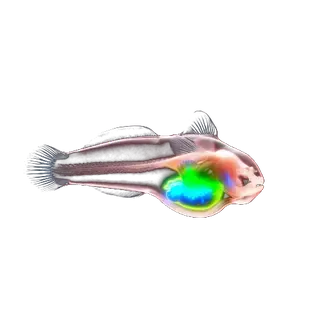
The lightboxes and the dark room exist. Prints, salon walls and the five-metre print can be made. The other formats are proposals, developed with each venue. The pictures on this page are visualisations, not photographs.
The presentation
The full presentation, with floor plans and views for each size of venue, the formats, the book and the artist.
PDF · 24 pages · 6 MB
An exhibition for every kind of venue
Glowing Oceans is a touring exhibition of deep-sea art and natural history, offered to museums, aquariums, science centres, galleries, exhibition centres and cities, each at its own scale.
Questions from venues
How much space does the exhibition need?
From a single wall to a whole hall. There are designs for one gallery wall, for rooms of 100 and 200 square metres, for halls of 400 and 900 square metres, and for an open-air exhibition across a city.
What does the exhibition include?
The works themselves, printed on wood or acrylic under glass; lightboxes up to three metres high and prints up to five metres; the design of the route and the hang; wall texts and captions with sourced facts about each animal; and the book to show and sell beside it.
Can the exhibition tour?
Yes. It is designed to travel. Each of the 101 creatures has three plates, so each venue receives its own selection, and a returning exhibition can be entirely new.
Is it suitable for families and school groups?
Yes. The pictures speak to every age, the facts are short and written to be read aloud, and each creature carries the same six signs. A visit works for a family, a school class or an adult audience.
Can it be shown in an aquarium?
Yes. A room of 100 or 200 square metres fits beside the tanks, and the dark room and lightboxes need no daylight. The works show the deep-sea animals an aquarium cannot keep alive.
How does a city exhibition work?
Twenty-four creatures, five to ten metres across, are fixed to buildings across the town and linked by a walking trail, lit after dark or brought to life by projection mapping. The municipality provides the buildings and permissions, a sponsor supports the production, and the artist’s team designs and makes it. It runs for a season and is free to the public.
How do we receive the presentation or book the exhibition?
The full exhibition presentation, with floor plans and views for each size of venue, can be downloaded from this page as a PDF. To discuss dates, the selection of works and terms, write to us.