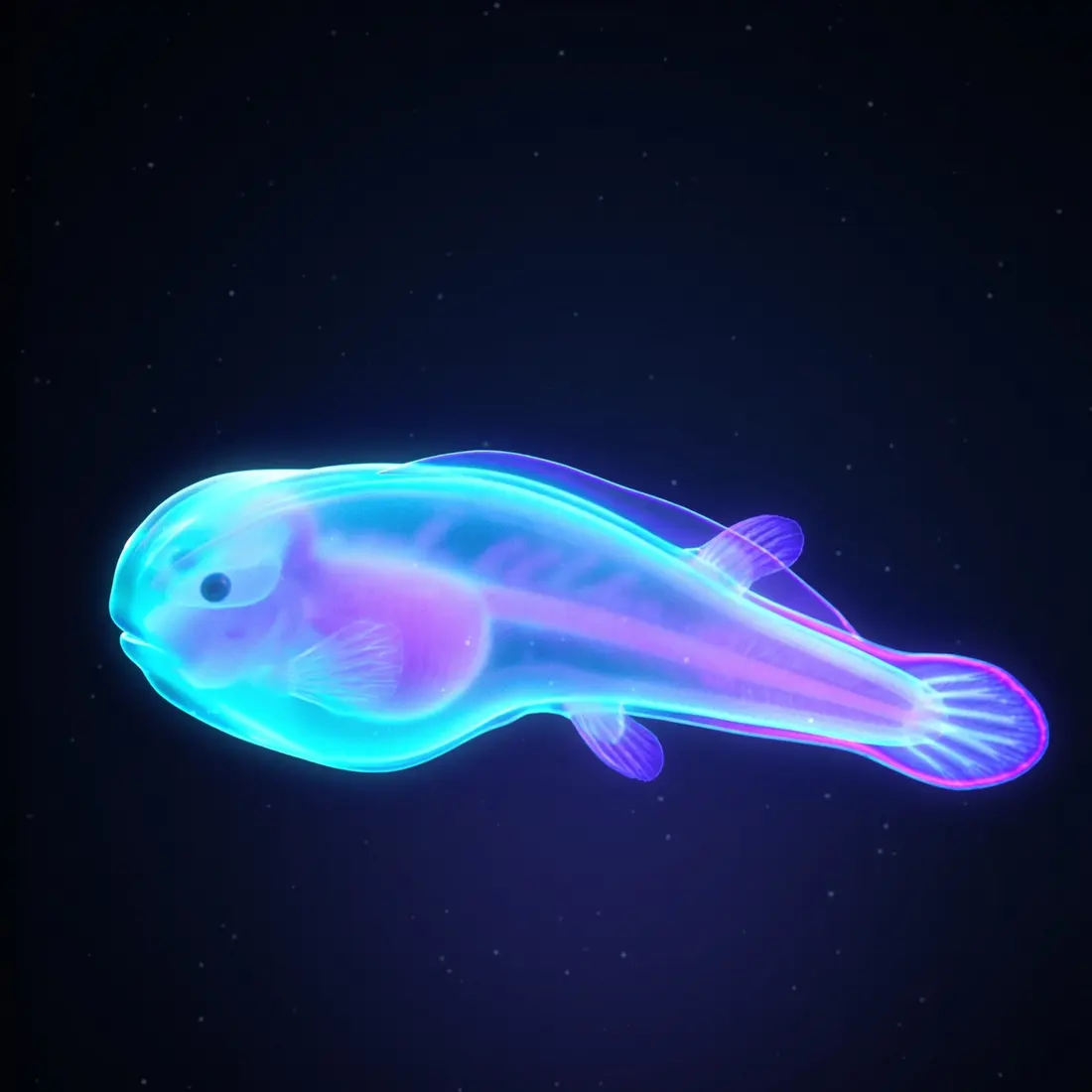
Atacama Snailfish
Liparidae sp. not yet formally named
Plates and text by Firoiu Dan Nicolae
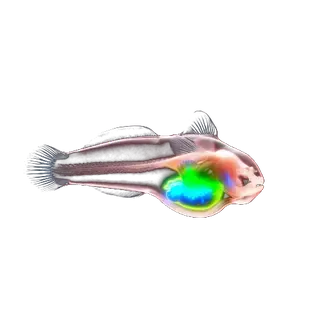
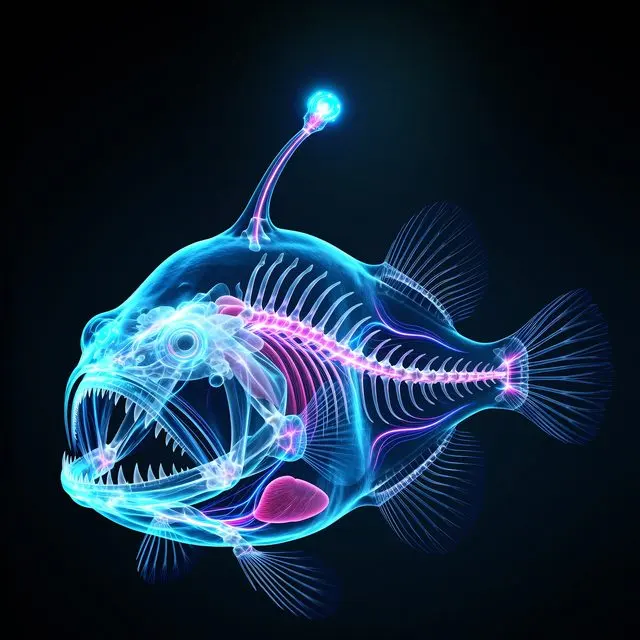
Usually found at 6,500–7,500 m. From Glowing Oceans: An Atlas of Glowing Living Forms, where every creature has two facing pages: what is known on the left, the full plate on the right.
Three facts
They are built of soft jelly
Instead of firm muscle and scales, its body is soft and gelatinous. Water-rich tissues help it cope with the enormous pressure of the trench.
Their bones are only partly hardened
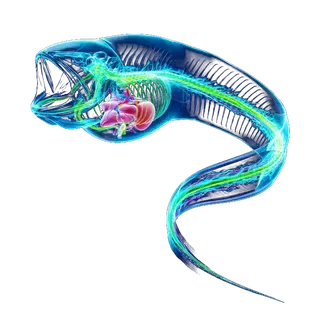
Its skeleton is weakly calcified. Scientists think this helps it remain flexible and buoyant under extreme pressure.
They live near the deepest limit for fish
Fish are thought unable to live much below 8,200–8,400 metres; the deepest ever filmed was a young snailfish at 8,336 m off Japan. The Atacama snailfish lives close to that limit.
Field notes
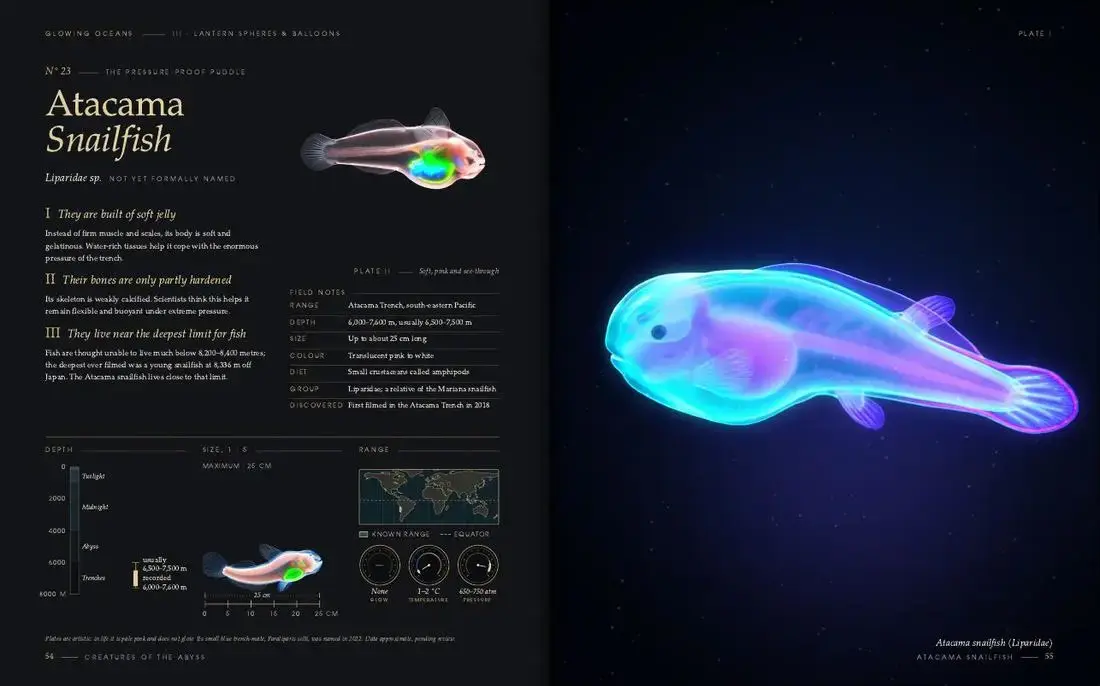
| Range | Atacama Trench, south-eastern Pacific |
|---|---|
| Depth | 6,000–7,600 m, usually 6,500–7,500 m |
| Size | Up to about 25 cm long |
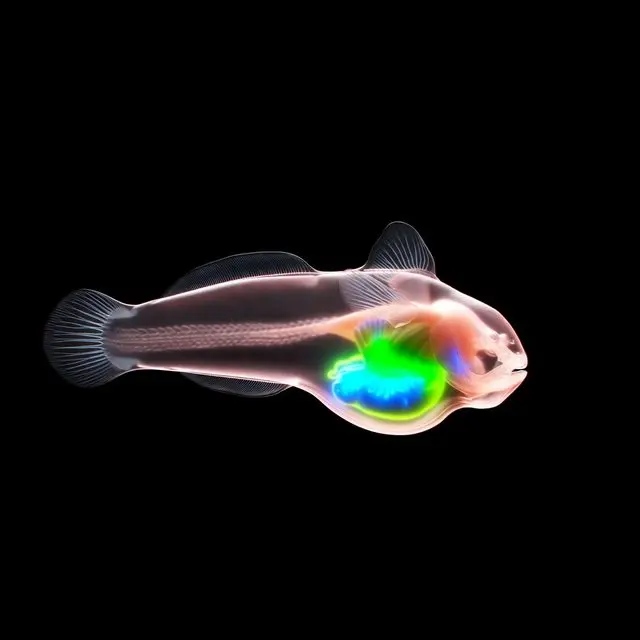
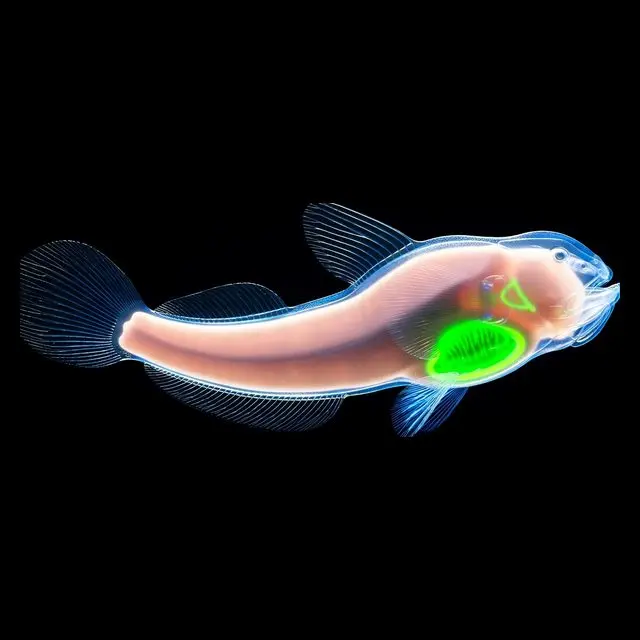
| Colour | Translucent pink to white |
| Diet | Small crustaceans called amphipods |
| Group | Liparidae; a relative of the Mariana snailfish |
| Discovered | First filmed in the Atacama Trench in 2018 |
The plates are artistic interpretations and do not show the true colours of the living animal. Every measurement has a source, printed at the back of the book.
More plates
Where it lives
The Atacama snailfish is usually found at 6,500–7,500 m, in the hadal zone: the world of the deep trenches, the deepest places on Earth. It has been recorded from 6,000–7,600 m, across the hadal zone. Its range: Atacama Trench, south-eastern Pacific.
Below about 200 metres only a blue dusk remains, and below a thousand metres sunlight is gone altogether. Every creature in Glowing Oceans carries the same depth sign, so you can see at a glance how deep it lives compared with the others.
In the book
In the book, the Atacama snailfish is creature no. 23 of 101. It belongs to family III, Lantern Spheres & Balloons: round bodies and glowing lures, from the anglerfish to the snailfish. The families are grouped by shape, not by family tree, so the book reads as a gallery.
Its two pages hold three facts written to be read aloud, the field notes, a life-size view, a map of its range, and dials for its glow, water temperature and pressure. Every fact is traced to a source printed at the back of the book.
Related creatures

Author and artist of Glowing Oceans and the Glowing Series. He wrote the book’s text, drew its 303 plates, and designs the exhibitions that grow out of it.
More about Firoiu Dan Nicolae →