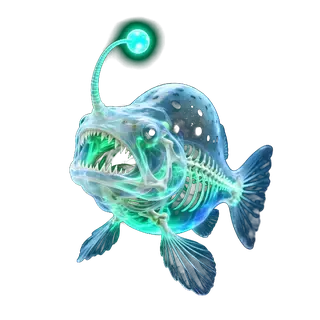
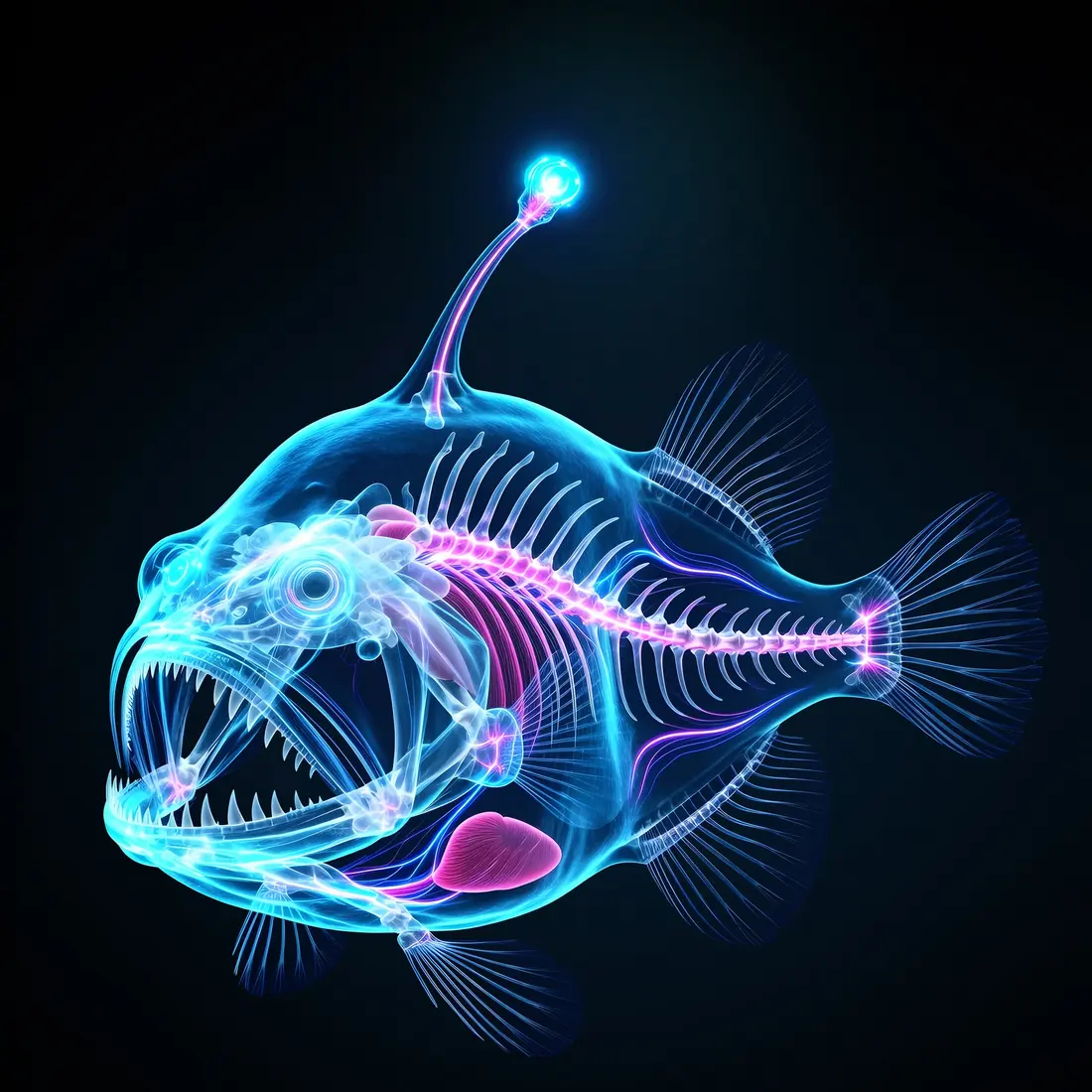
Humpback Anglerfish
Melanocetus johnsonii Günther, 1864
Plates and text by Firoiu Dan Nicolae
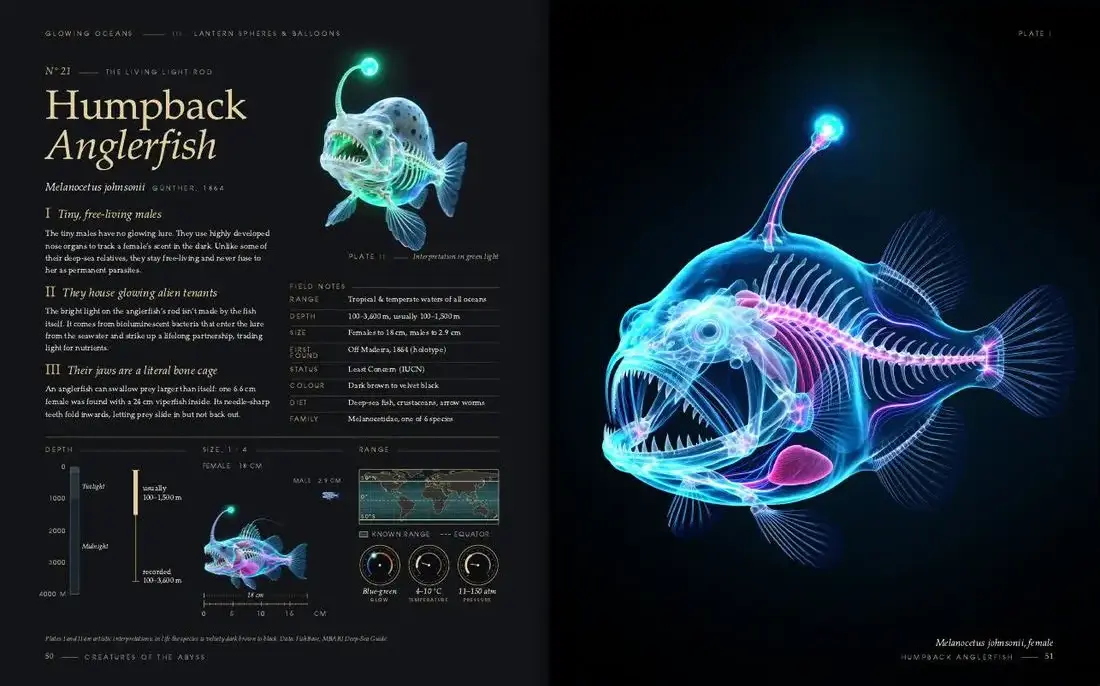
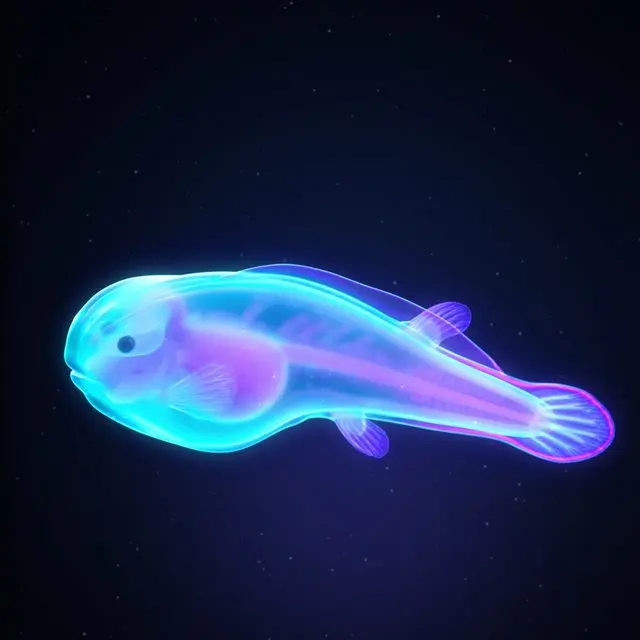
Usually found at 100–1,500 m. From Glowing Oceans: An Atlas of Glowing Living Forms, where every creature has two facing pages: what is known on the left, the full plate on the right.
Three facts
Tiny, free-living males
The tiny males have no glowing lure. They use highly developed nose organs to track a female’s scent in the dark. Unlike some of their deep-sea relatives, they stay free-living and never fuse to her as permanent parasites.
They house glowing alien tenants
The bright light on the anglerfish’s rod isn’t made by the fish itself. It comes from bioluminescent bacteria that enter the lure from the seawater and strike up a lifelong partnership, trading light for nutrients.
Their jaws are a literal bone cage
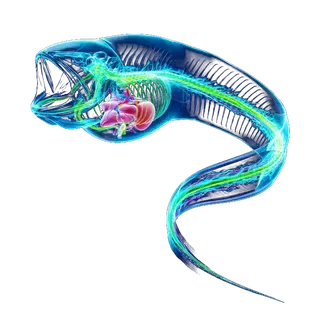
An anglerfish can swallow prey larger than itself: one 6.6 cm female was found with a 24 cm viperfish inside. Its needle-sharp teeth fold inwards, letting prey slide in but not back out.
Field notes
| Range | Tropical & temperate waters of all oceans |
|---|---|
| Depth | 100–3,600 m, usually 100–1,500 m |
| Size | Females to 18 cm, males to 2.9 cm |
| First | Off Madeira, 1864 (holotype) FOUND |
| Status | Least Concern (IUCN) |
| Colour | Dark brown to velvet black |
| Diet | Deep-sea fish, crustaceans, arrow worms |
| Family | Melanocetidae, one of 6 species |
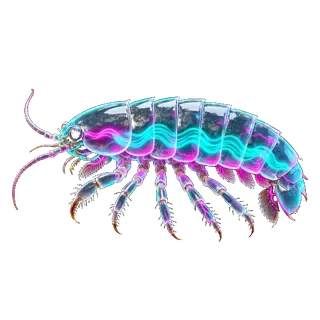
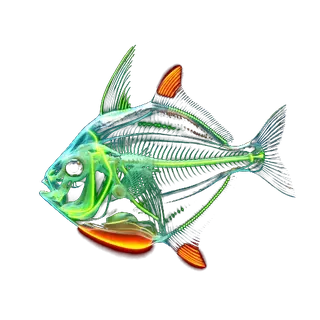
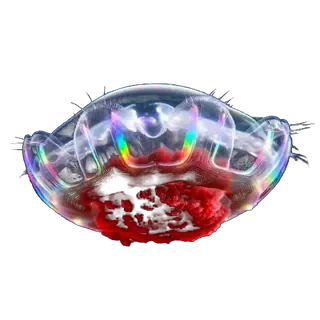
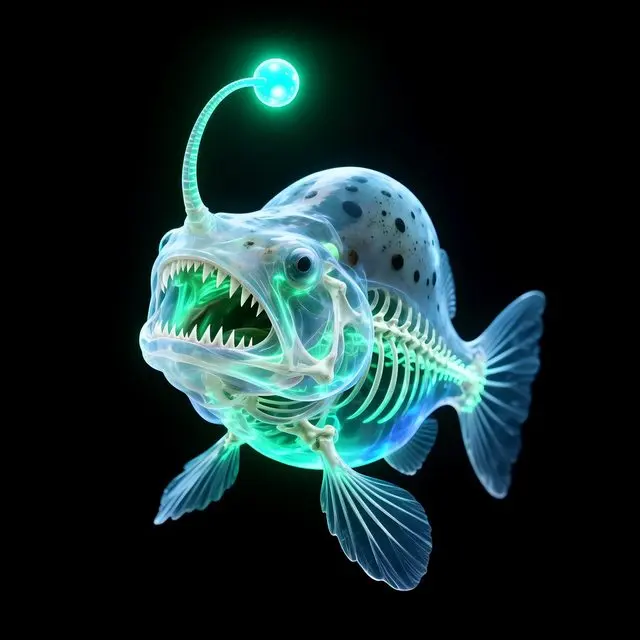
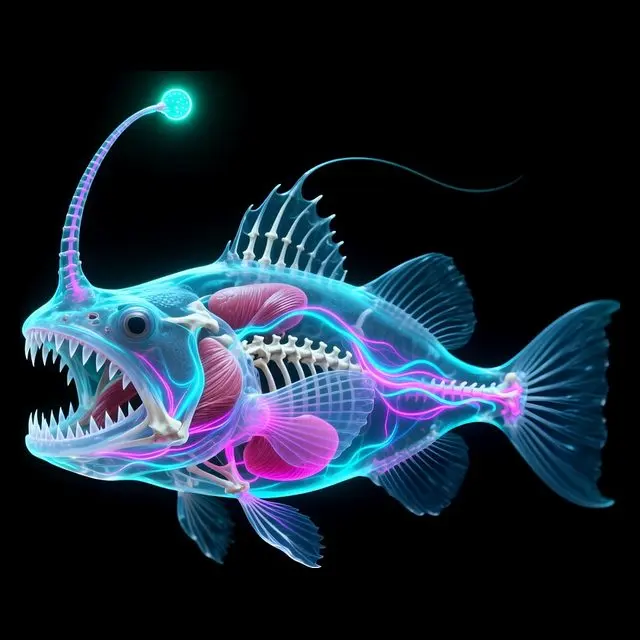
The plates are artistic interpretations and do not show the true colours of the living animal. Every measurement has a source, printed at the back of the book.
More plates
Where it lives
The humpback anglerfish is usually found at 100–1,500 m, in the sunlit, twilight and midnight zones: the layer where sunlight still reaches and plants can grow. It has been recorded from 100–3,600 m, across the sunlit, twilight and midnight zones. Its range: Tropical & temperate waters of all oceans.
Below about 200 metres only a blue dusk remains, and below a thousand metres sunlight is gone altogether. Every creature in Glowing Oceans carries the same depth sign, so you can see at a glance how deep it lives compared with the others.
In the book
In the book, the humpback anglerfish is creature no. 21 of 101. It belongs to family III, Lantern Spheres & Balloons: round bodies and glowing lures, from the anglerfish to the snailfish. The families are grouped by shape, not by family tree, so the book reads as a gallery.
Its two pages hold three facts written to be read aloud, the field notes, a life-size view, a map of its range, and dials for its glow, water temperature and pressure. Every fact is traced to a source printed at the back of the book.
Related creatures

Author and artist of Glowing Oceans and the Glowing Series. He wrote the book’s text, drew its 303 plates, and designs the exhibitions that grow out of it.
More about Firoiu Dan Nicolae →