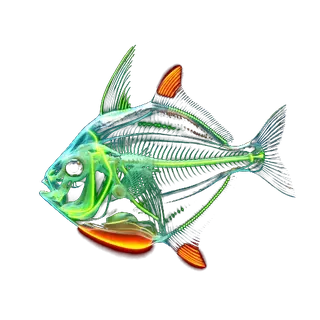
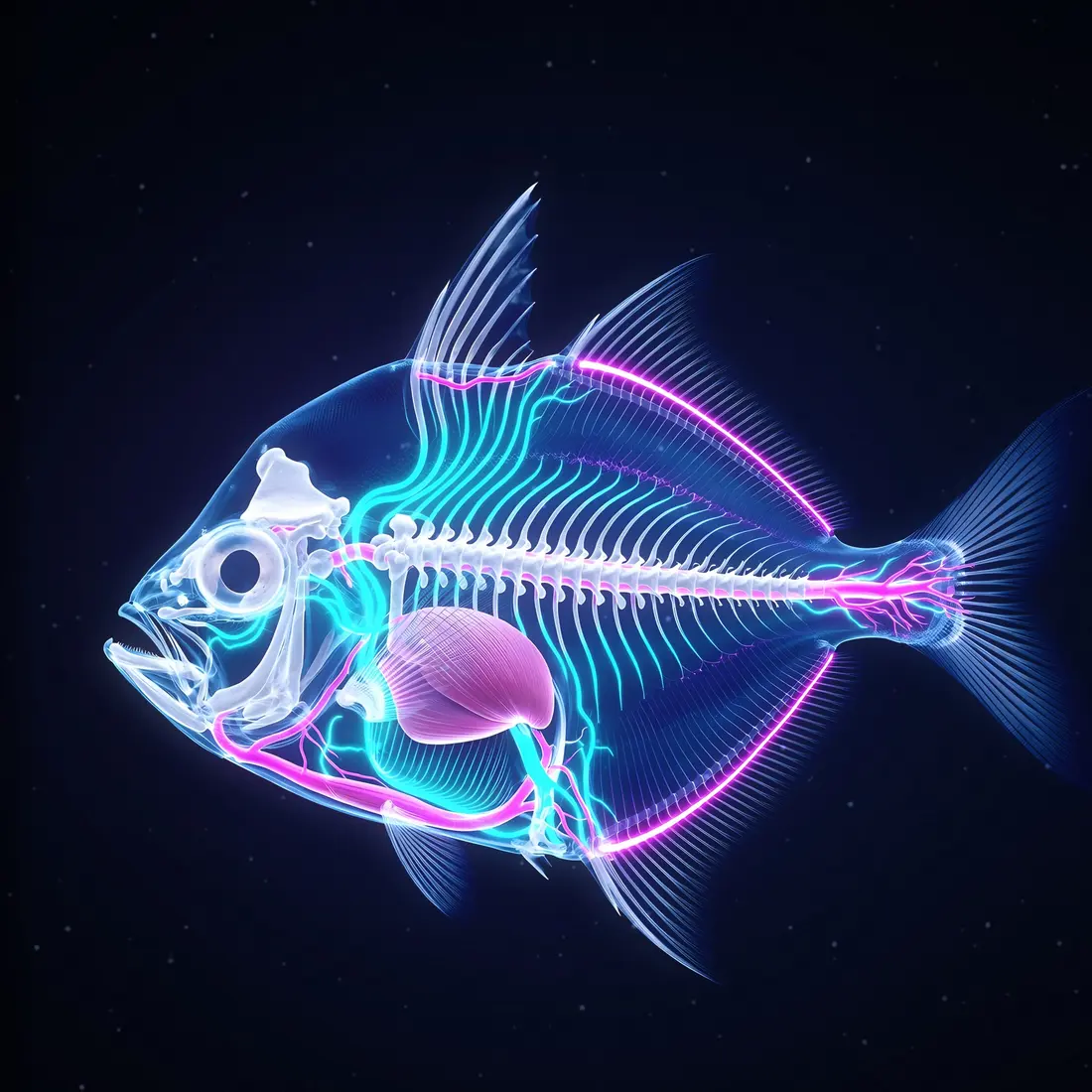
Diaphanous Hatchetfish
Sternoptyx diaphana Hermann, 1781
Plates and text by Firoiu Dan Nicolae
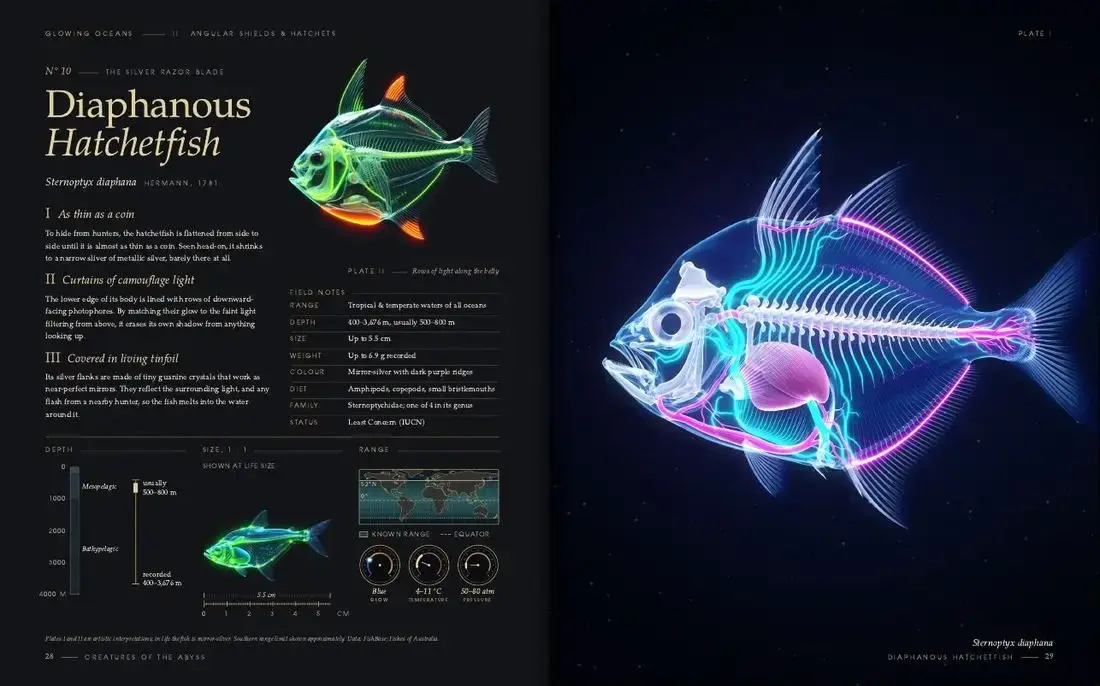
Usually found at 500–800 m. From Glowing Oceans: An Atlas of Glowing Living Forms, where every creature has two facing pages: what is known on the left, the full plate on the right.
Three facts
As thin as a coin
To hide from hunters, the hatchetfish is flattened from side to side until it is almost as thin as a coin. Seen head-on, it shrinks to a narrow sliver of metallic silver, barely there at all.
Curtains of camouflage light
The lower edge of its body is lined with rows of downward- facing photophores. By matching their glow to the faint light filtering from above, it erases its own shadow from anything looking up.
Covered in living tinfoil
Its silver flanks are made of tiny guanine crystals that work as near-perfect mirrors. They reflect the surrounding light, and any flash from a nearby hunter, so the fish melts into the water around it.
Field notes
| Range | Tropical & temperate waters of all oceans |
|---|---|
| Depth | 400–3,676 m, usually 500–800 m |
| Size | Up to 5.5 cm |
| Weight | Up to 6.9 g recorded |
| Colour | Mirror-silver with dark purple ridges |
| Diet | Amphipods, copepods, small bristlemouths |
| Family | Sternoptychidae; one of 4 in its genus |
| Status | Least Concern (IUCN) |
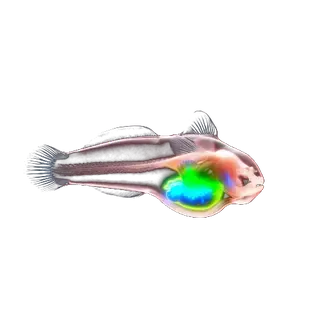
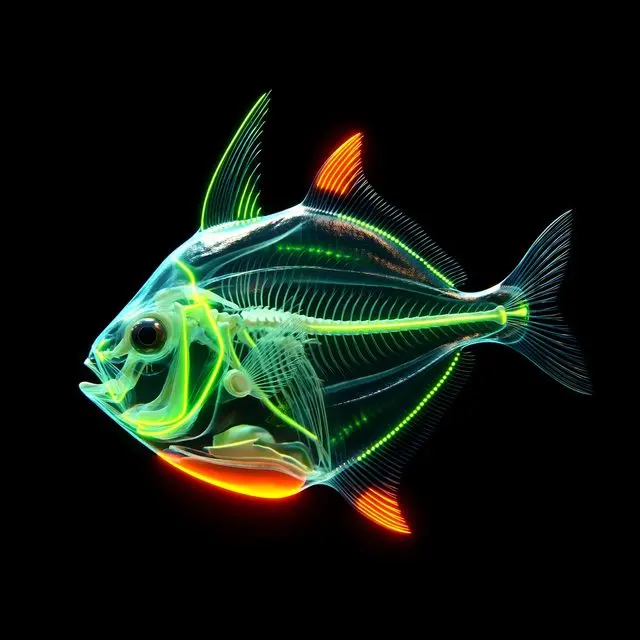
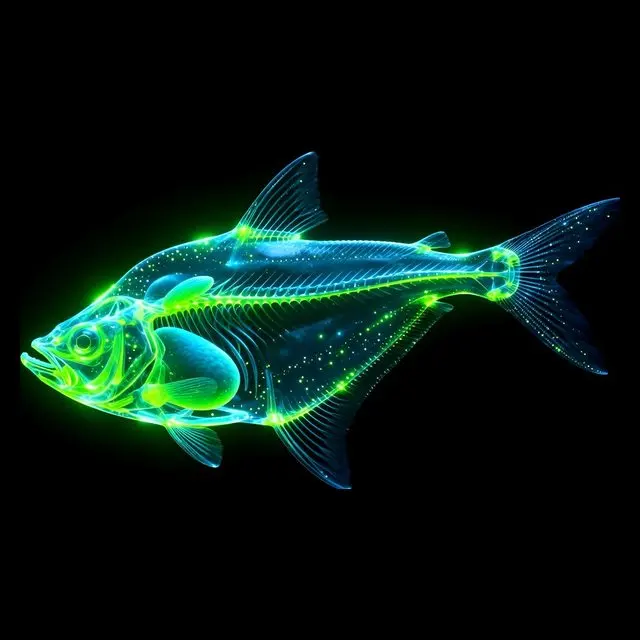
The plates are artistic interpretations and do not show the true colours of the living animal. Every measurement has a source, printed at the back of the book.
More plates
Where it lives
The diaphanous hatchetfish is usually found at 500–800 m, in the twilight zone: the layer where only a faint blue dusk remains. It has been recorded from 400–3,676 m, across the twilight and midnight zones. Its range: Tropical & temperate waters of all oceans.
Below about 200 metres only a blue dusk remains, and below a thousand metres sunlight is gone altogether. Every creature in Glowing Oceans carries the same depth sign, so you can see at a glance how deep it lives compared with the others.
In the book
In the book, the diaphanous hatchetfish is creature no. 10 of 101. It belongs to family II, Angular Shields & Hatchets: flat, sharp-edged bodies like blades and shields, such as the hatchetfish. The families are grouped by shape, not by family tree, so the book reads as a gallery.
Its two pages hold three facts written to be read aloud, the field notes, a life-size view, a map of its range, and dials for its glow, water temperature and pressure. Every fact is traced to a source printed at the back of the book.
Related creatures

Author and artist of Glowing Oceans and the Glowing Series. He wrote the book’s text, drew its 303 plates, and designs the exhibitions that grow out of it.
More about Firoiu Dan Nicolae →