Why red is invisible in the deep sea
Sunlight does not fade evenly in the sea. It loses its colours one by one, and red is the first to go.
By Firoiu Dan Nicolae · 26 October 2026
Colours fade with depth
Water absorbs light, but not every colour equally. Red is absorbed first, within the first metres to tens of metres; orange and yellow follow. Blue and blue-green travel farthest, which is why the open ocean looks blue and why, below a few hundred metres, only a faint blue dusk remains.
Red becomes black
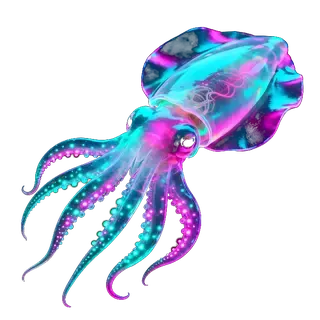
In the deep there is no red light left to reflect, so a red animal looks black and disappears against the dark water. That is why so many animals of the deep are red, deep purple or black. The vampire squid is coloured jet-black to deep velvet red.
A red belly that hides a meal
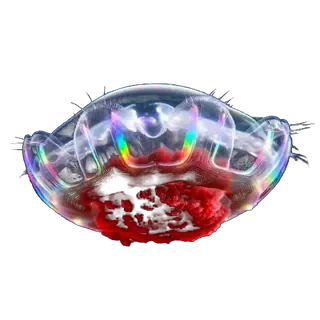
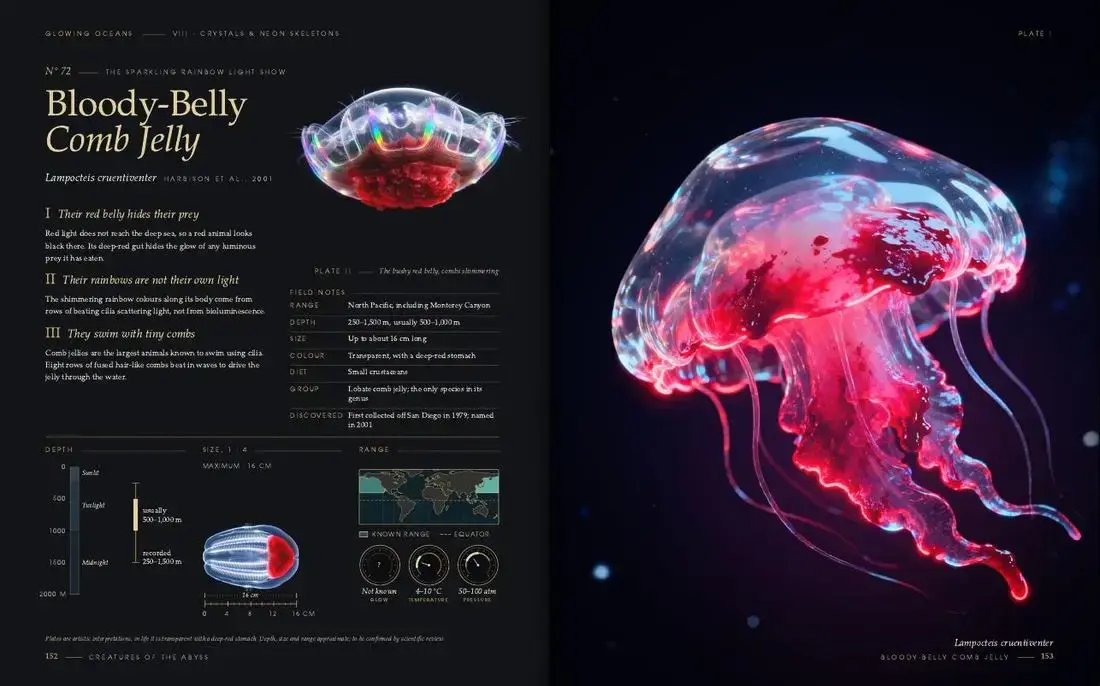
The bloody-belly comb jelly uses this trick from the inside. Red light does not reach the deep sea, so a red animal looks black there. Its deep-red gut hides the glow of any luminous prey it has eaten.
Most living light is blue
Most bioluminescence in the sea is blue or blue-green, the colours that travel farthest in water, and the eyes of most deep-sea animals are tuned to them. A few hunters break the rule: some dragonfishes, such as the stoplight loosejaw, make red light that most other animals cannot see, like a hidden searchlight.
Three ways to disappear
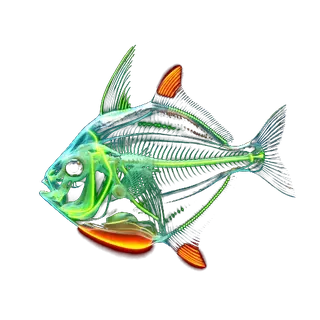
Deep-sea animals hide in three main ways. Some are transparent, like many jellies and comb jellies, so light passes straight through them. Some have mirror-like sides, like the diaphanous hatchetfish, which reflect the faint light around them. And many are red or black, colours that look the same as the dark water.
Ultra-black skin
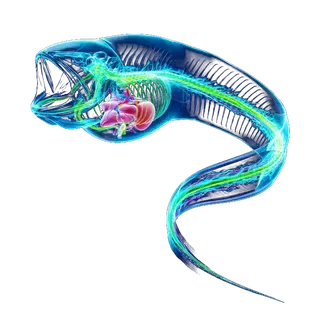
Some deep-sea fish go further than black. The black dragonfish, one of the creatures in the book, has skin that reflects only a tiny fraction of the light that falls on it, so even the glow of a nearby animal barely shows its outline.
What divers and cameras see
When a submersible shines its lamps on a red deep-sea animal, the animal suddenly looks bright red, because the lamps bring red light where there was none. Without those lamps, in its own world, the same animal is simply black and invisible.
Eyes made for blue
The eyes of most deep-sea animals are most sensitive to blue light, the colour that both sunlight and living light reach them with. Red, for them, is not just dark: it is often a colour they cannot see at all.
This is why red is such a good disguise in the deep. An animal that cannot see red cannot find a red shrimp or a red jelly, even when it swims right past.
In the book
Every creature in Glowing Oceans carries a glow sign, the colour of its light and how it makes it, beside a depth sign from the surface to the deepest trench. The plates themselves are artistic interpretations, drawn as living glass, and do not show the true colours of the living animal.

Author and artist of Glowing Oceans and the Glowing Series. He wrote the book’s text, drew its 303 plates, and designs the exhibitions that grow out of it.
More about Firoiu Dan Nicolae →