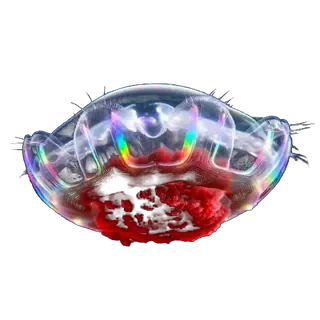
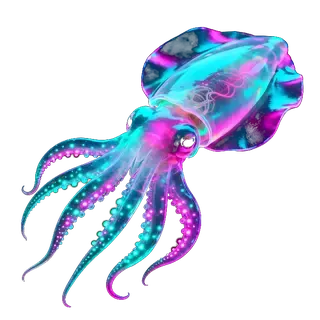
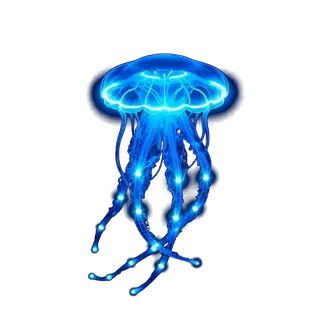
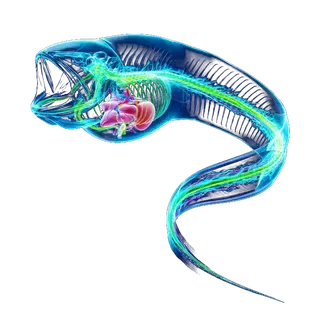
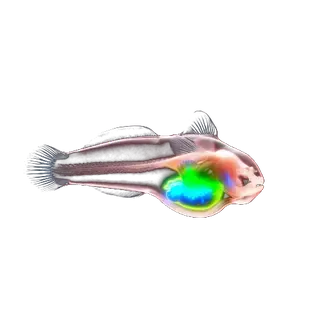
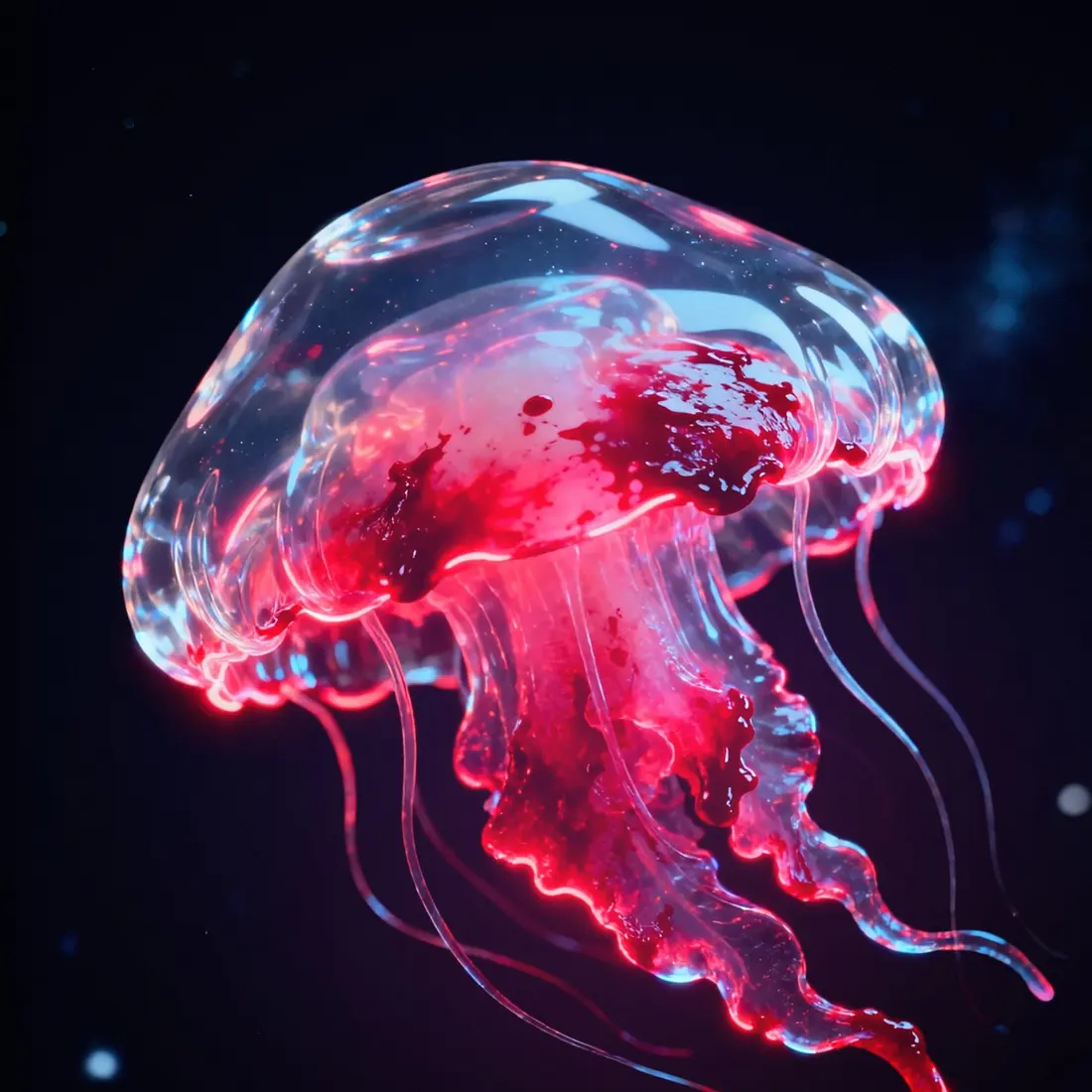
Bloody-Belly Comb Jelly
Lampocteis cruentiventer Harbison et al., 2001
Plates and text by Firoiu Dan Nicolae
Usually found at 500–1,000 m. From Glowing Oceans: An Atlas of Glowing Living Forms, where every creature has two facing pages: what is known on the left, the full plate on the right.
Three facts
Their red belly hides their prey
Red light does not reach the deep sea, so a red animal looks black there. Its deep-red gut hides the glow of any luminous prey it has eaten.
Their rainbows are not their own light
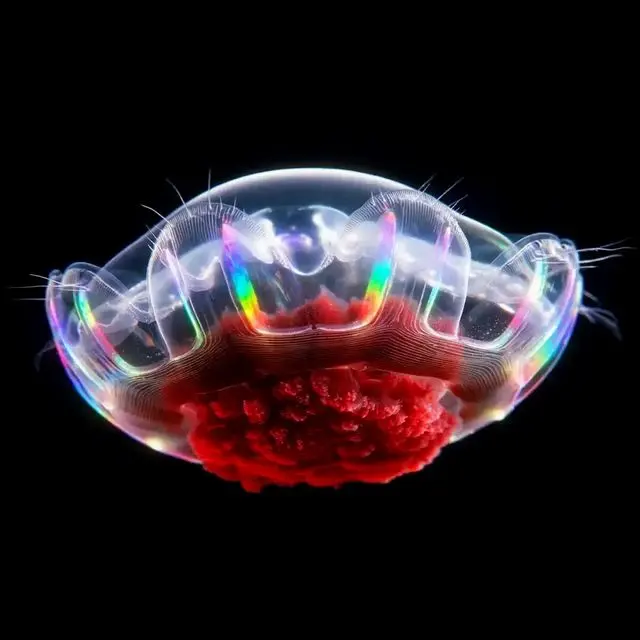
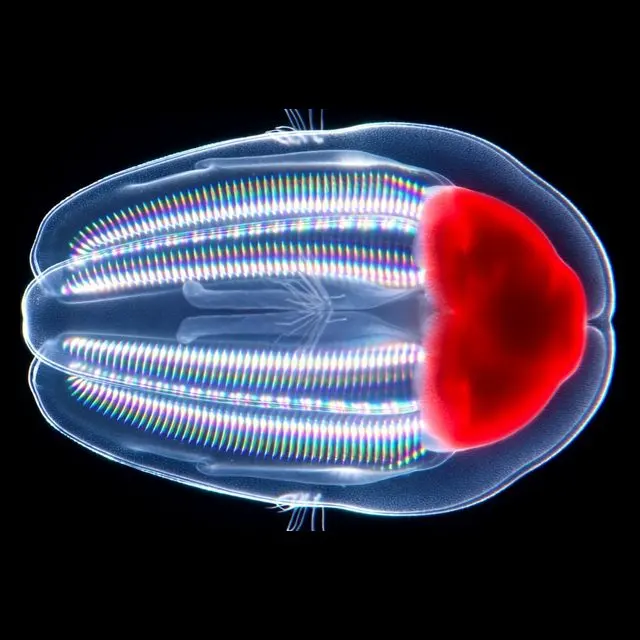
The shimmering rainbow colours along its body come from rows of beating cilia scattering light, not from bioluminescence.
They swim with tiny combs
Comb jellies are the largest animals known to swim using cilia. Eight rows of fused hair-like combs beat in waves to drive the jelly through the water.
Field notes
| Range | North Pacific, including Monterey Canyon |
|---|---|
| Depth | 250–1,500 m, usually 500–1,000 m |
| Size | Up to about 16 cm long |
| Colour | Transparent, with a deep-red stomach |
| Diet | Small crustaceans |
| Group | Lobate comb jelly; the only species in its genus |
| Discovered | First collected off San Diego in 1979; named in 2001 |
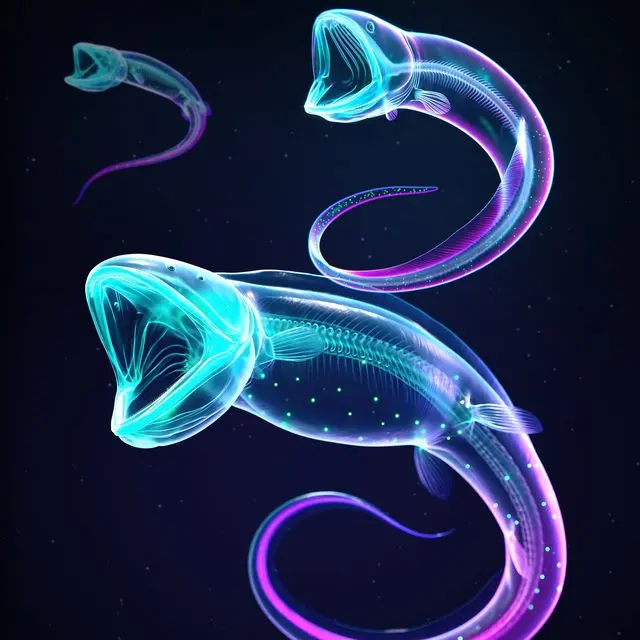
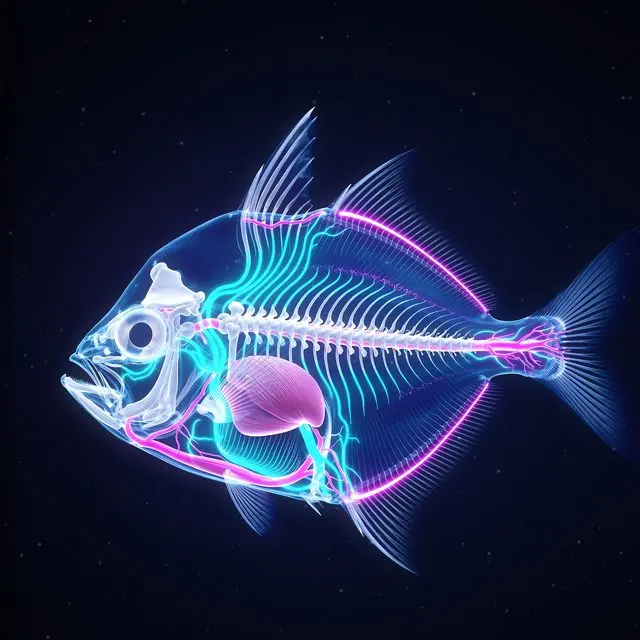
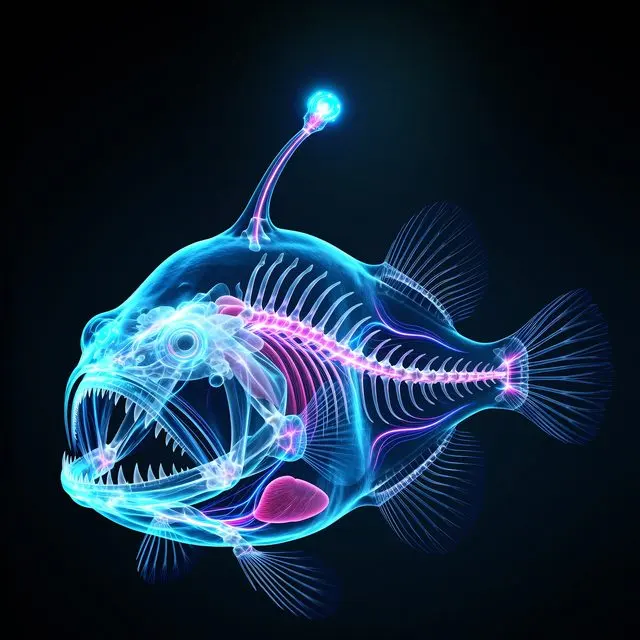
The plates are artistic interpretations and do not show the true colours of the living animal. Every measurement has a source, printed at the back of the book.
More plates
Where it lives
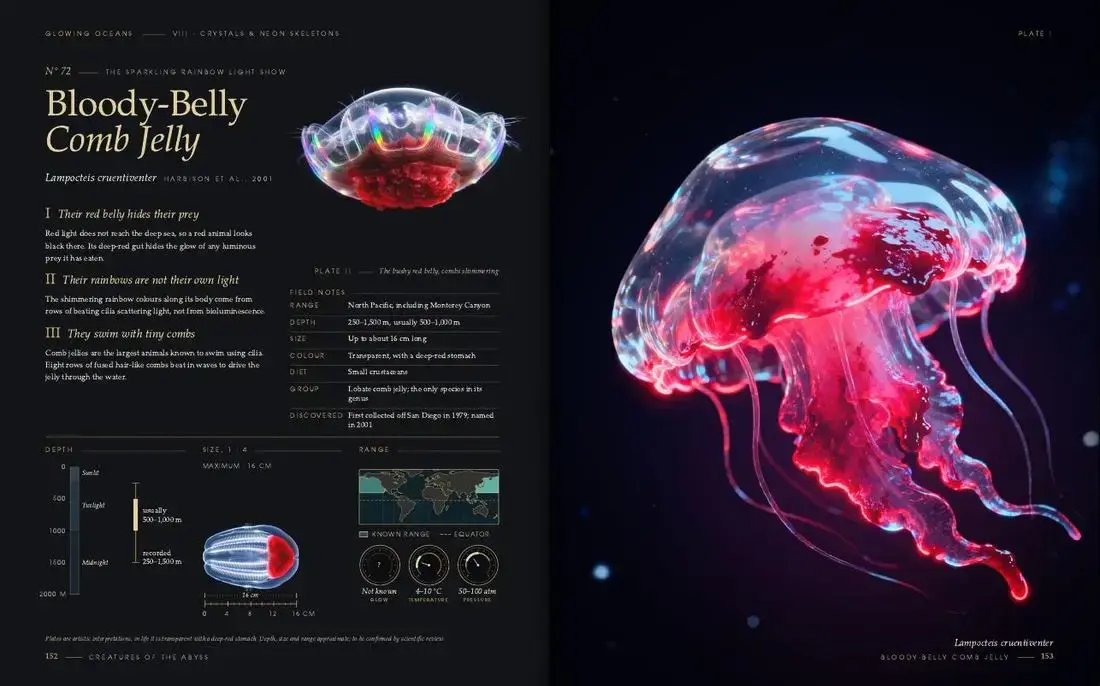
The bloody-belly comb jelly is usually found at 500–1,000 m, in the twilight zone: the layer where only a faint blue dusk remains. It has been recorded from 250–1,500 m, across the twilight and midnight zones. Its range: North Pacific, including Monterey Canyon.
Below about 200 metres only a blue dusk remains, and below a thousand metres sunlight is gone altogether. Every creature in Glowing Oceans carries the same depth sign, so you can see at a glance how deep it lives compared with the others.
In the book
In the book, the bloody-belly comb jelly is creature no. 72 of 101. It belongs to family VIII, Crystals & Neon Skeletons: see-through bodies with glowing inner structures, like the comb jellies. The families are grouped by shape, not by family tree, so the book reads as a gallery.
Its two pages hold three facts written to be read aloud, the field notes, a life-size view, a map of its range, and dials for its glow, water temperature and pressure. Every fact is traced to a source printed at the back of the book.
Related creatures
Author and artist of Glowing Oceans and the Glowing Series. He wrote the book’s text, drew its 303 plates, and designs the exhibitions that grow out of it.
More about Firoiu Dan Nicolae →