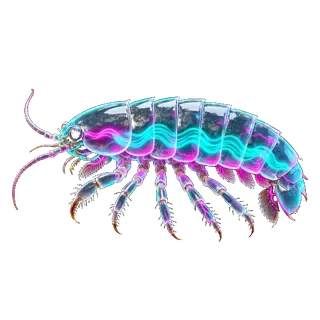
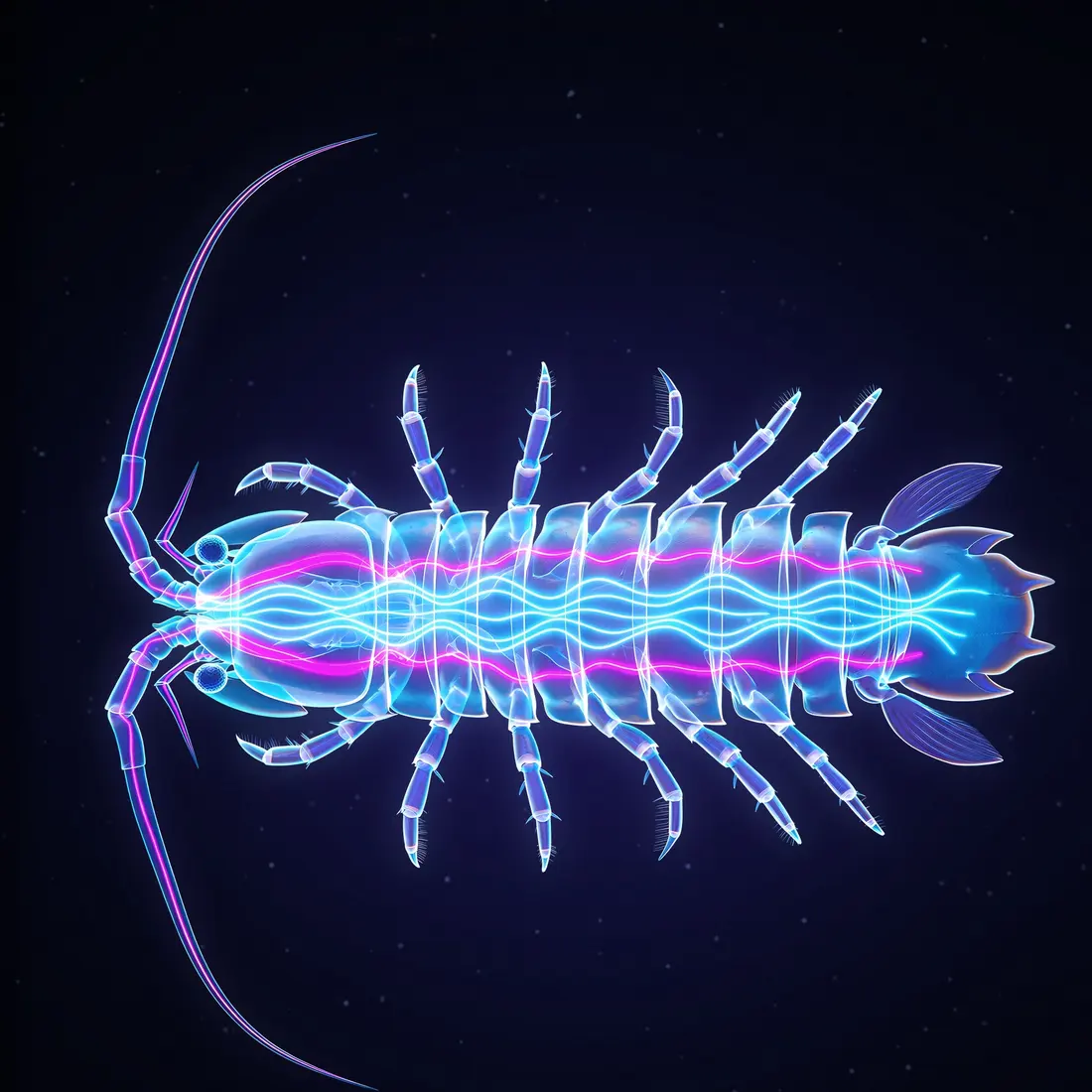
Giant Isopod
Bathynomus giganteus A. Milne-Edwards, 1879
Plates and text by Firoiu Dan Nicolae
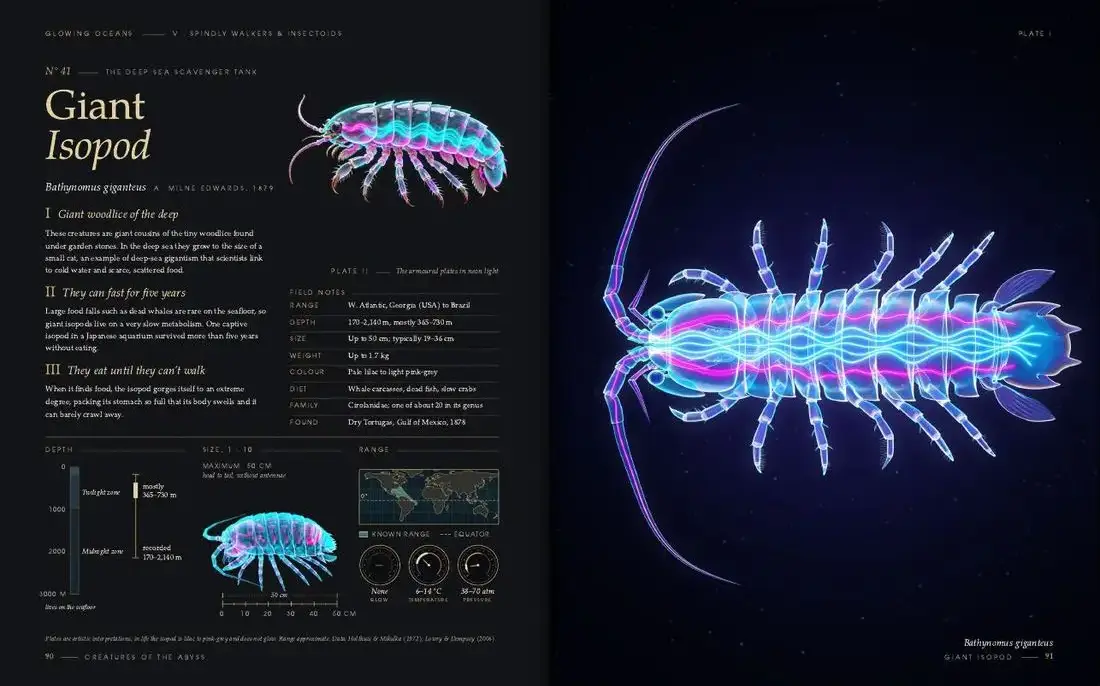
Mostly found at 365–730 m. From Glowing Oceans: An Atlas of Glowing Living Forms, where every creature has two facing pages: what is known on the left, the full plate on the right.
Three facts
Giant woodlice of the deep
These creatures are giant cousins of the tiny woodlice found under garden stones. In the deep sea they grow to the size of a small cat, an example of deep-sea gigantism that scientists link to cold water and scarce, scattered food.
They can fast for five years
Large food falls such as dead whales are rare on the seafloor, so giant isopods live on a very slow metabolism. One captive isopod in a Japanese aquarium survived more than five years without eating.
They eat until they can’t walk
When it finds food, the isopod gorges itself to an extreme degree, packing its stomach so full that its body swells and it can barely crawl away.
Field notes
| Range | W. Atlantic, Georgia (USA) to Brazil |
|---|---|
| Depth | 170–2,140 m, mostly 365–730 m |
| Size | Up to 50 cm; typically 19–36 cm |
| Weight | Up to 1.7 kg |
| Colour | Pale lilac to light pink-grey |
| Diet | Whale carcasses, dead fish, slow crabs |
| Family | Cirolanidae; one of about 20 in its genus |
| Found | Dry Tortugas, Gulf of Mexico, 1878 |
The plates are artistic interpretations and do not show the true colours of the living animal. Every measurement has a source, printed at the back of the book.
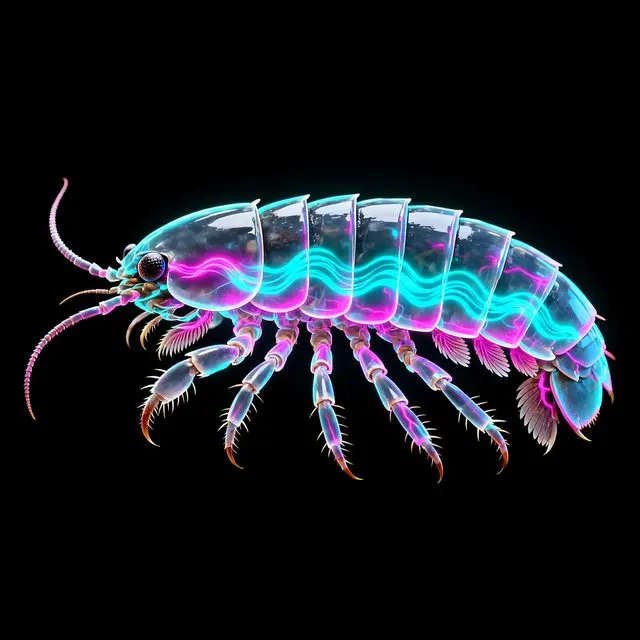
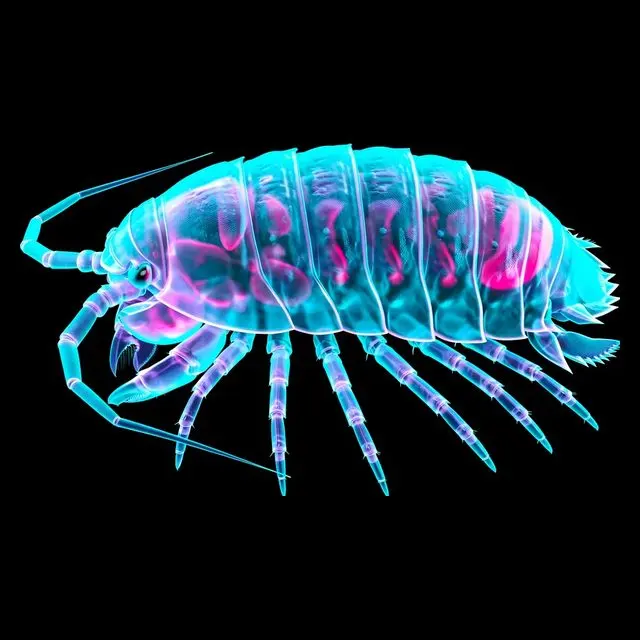
More plates
Where it lives
The giant isopod is mostly found at 365–730 m, in the twilight zone: the layer where only a faint blue dusk remains. It has been recorded from 170–2,140 m, across the sunlit, twilight and midnight zones. Its range: W. Atlantic, Georgia (USA) to Brazil.
Below about 200 metres only a blue dusk remains, and below a thousand metres sunlight is gone altogether. Every creature in Glowing Oceans carries the same depth sign, so you can see at a glance how deep it lives compared with the others.
In the book
In the book, the giant isopod is creature no. 41 of 101. It belongs to family V, Spindly Walkers & Insectoids: long-legged walkers of the seafloor, isopods, crabs and sea spiders. The families are grouped by shape, not by family tree, so the book reads as a gallery.
Its two pages hold three facts written to be read aloud, the field notes, a life-size view, a map of its range, and dials for its glow, water temperature and pressure. Every fact is traced to a source printed at the back of the book.
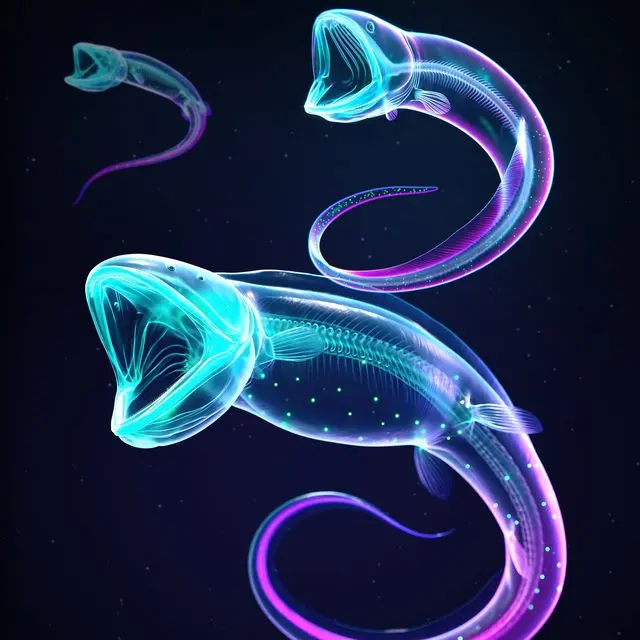
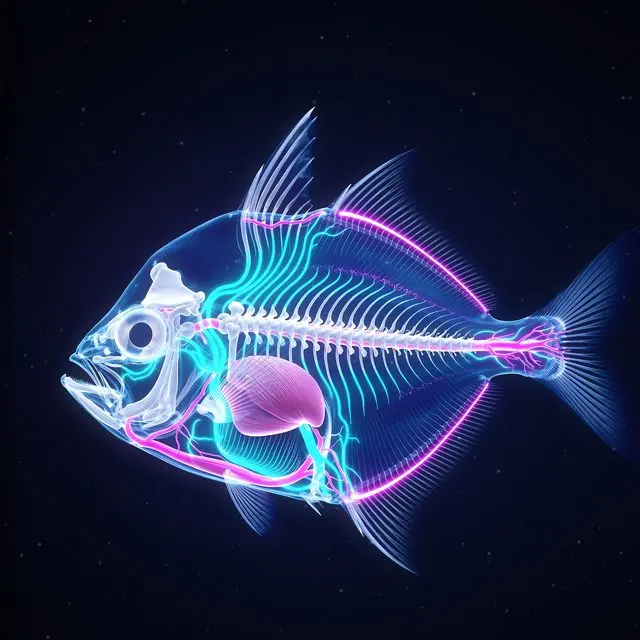
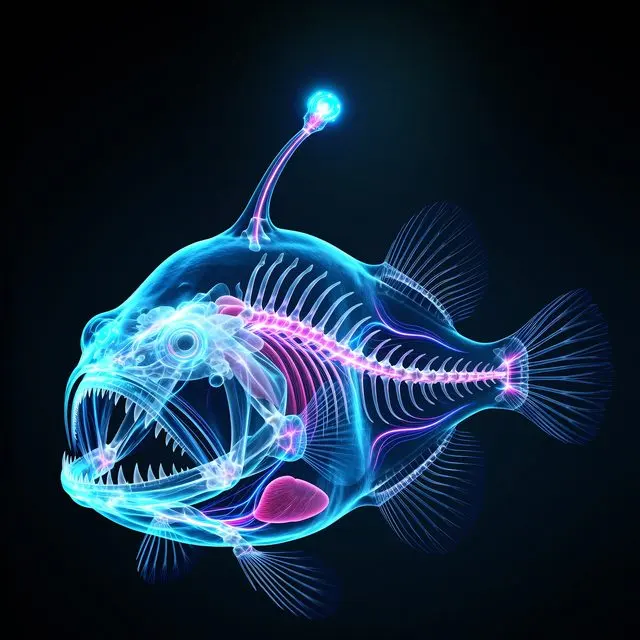
Related creatures

Author and artist of Glowing Oceans and the Glowing Series. He wrote the book’s text, drew its 303 plates, and designs the exhibitions that grow out of it.
More about Firoiu Dan Nicolae →