How deep-sea animals make their own light
Below a thousand metres, sunlight is gone. Yet the deep ocean is not dark: it flickers, pulses and glows with light made by living things.
By Firoiu Dan Nicolae · 26 October 2026
What bioluminescence is
Bioluminescence is light made by a living thing. It comes from a chemical reaction in which a molecule called luciferin releases its energy as light, usually with the help of an enzyme, luciferase.
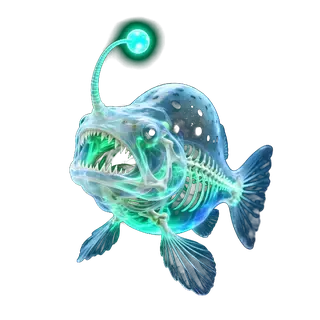
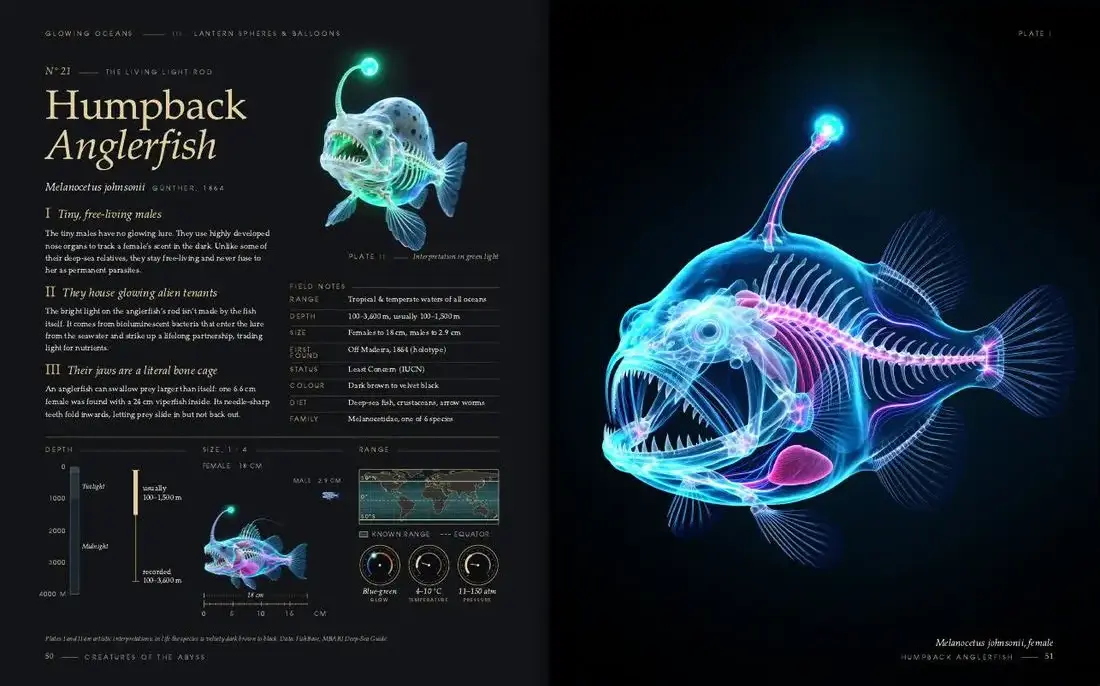
Some animals make this light themselves. Others borrow it. The humpback anglerfish does not make the light on its rod: The bright light on the anglerfish’s rod isn’t made by the fish itself. It comes from bioluminescent bacteria that enter the lure from the seawater and strike up a lifelong partnership, trading light for nutrients.
How common it is
In the deep sea, light is the rule rather than the exception. In one survey of the waters off California, three in every four animals observed could produce light.
Light as a lure
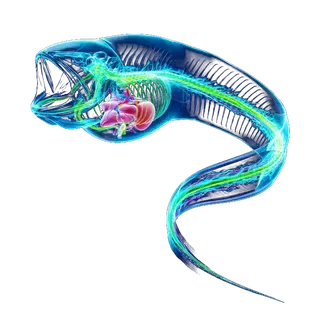
The anglerfish dangles its glowing lure in front of its mouth. The pelican eel carries a light organ at the very end of its long, whip-thin tail; it is thought to flick this glowing tip like a lure, drawing curious creatures towards its mouth.
Light as camouflage
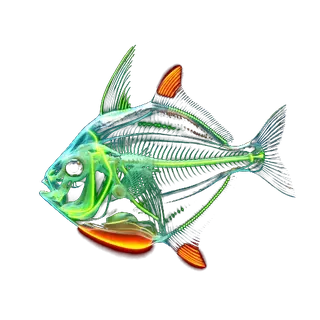
From below, any animal is a dark silhouette against the faint glow from above. The diaphanous hatchetfish solves this with light: The lower edge of its body is lined with rows of downward- facing photophores. By matching their glow to the faint light filtering from above, it erases its own shadow from anything looking up.
Light as an alarm
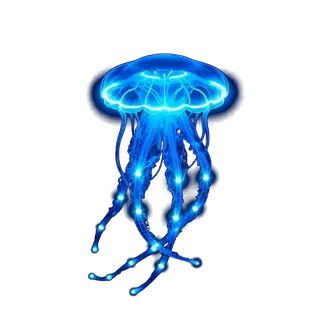
The Atolla jelly uses light to call for help. When attacked, the Atolla jelly makes rings of blue light that spin around its bell. The display can be seen from far away in the dark. Scientists think the display is meant to attract a larger predator that may attack whatever is attacking the jelly, giving the jelly a chance to escape.
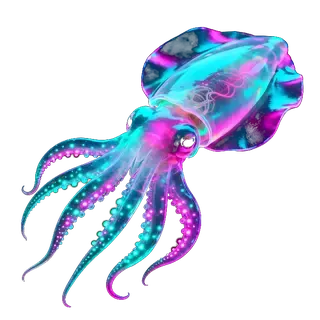
The vampire squid has its own trick: Instead of black ink, which is useless in darkness, it releases a sticky cloud of glowing mucus from its arm tips. The cloud sparkles with tiny blue lights that dazzle a predator while the squid slips away into the black.
Hiding light
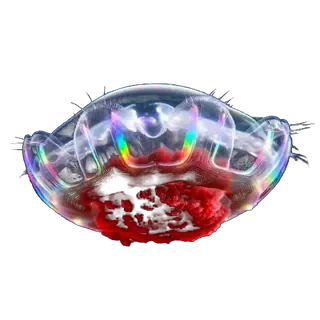
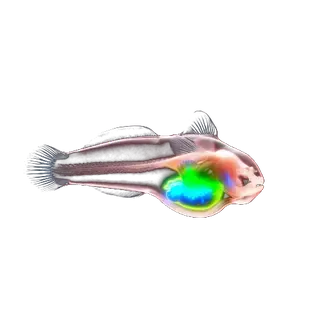
Not every animal wants to glow. For the bloody-belly comb jelly, red light does not reach the deep sea, so a red animal looks black there. Its deep-red gut hides the glow of any luminous prey it has eaten. And its rainbow shimmer is not light at all: the shimmering rainbow colours along its body come from rows of beating cilia scattering light, not from bioluminescence.

Author and artist of Glowing Oceans and the Glowing Series. He wrote the book’s text, drew its 303 plates, and designs the exhibitions that grow out of it.
More about Firoiu Dan Nicolae →